
Featured results
Selected discoveries and research highlights
Concise, visual introductions to selected results, with direct paths to the underlying observations, scientific context, and publications.
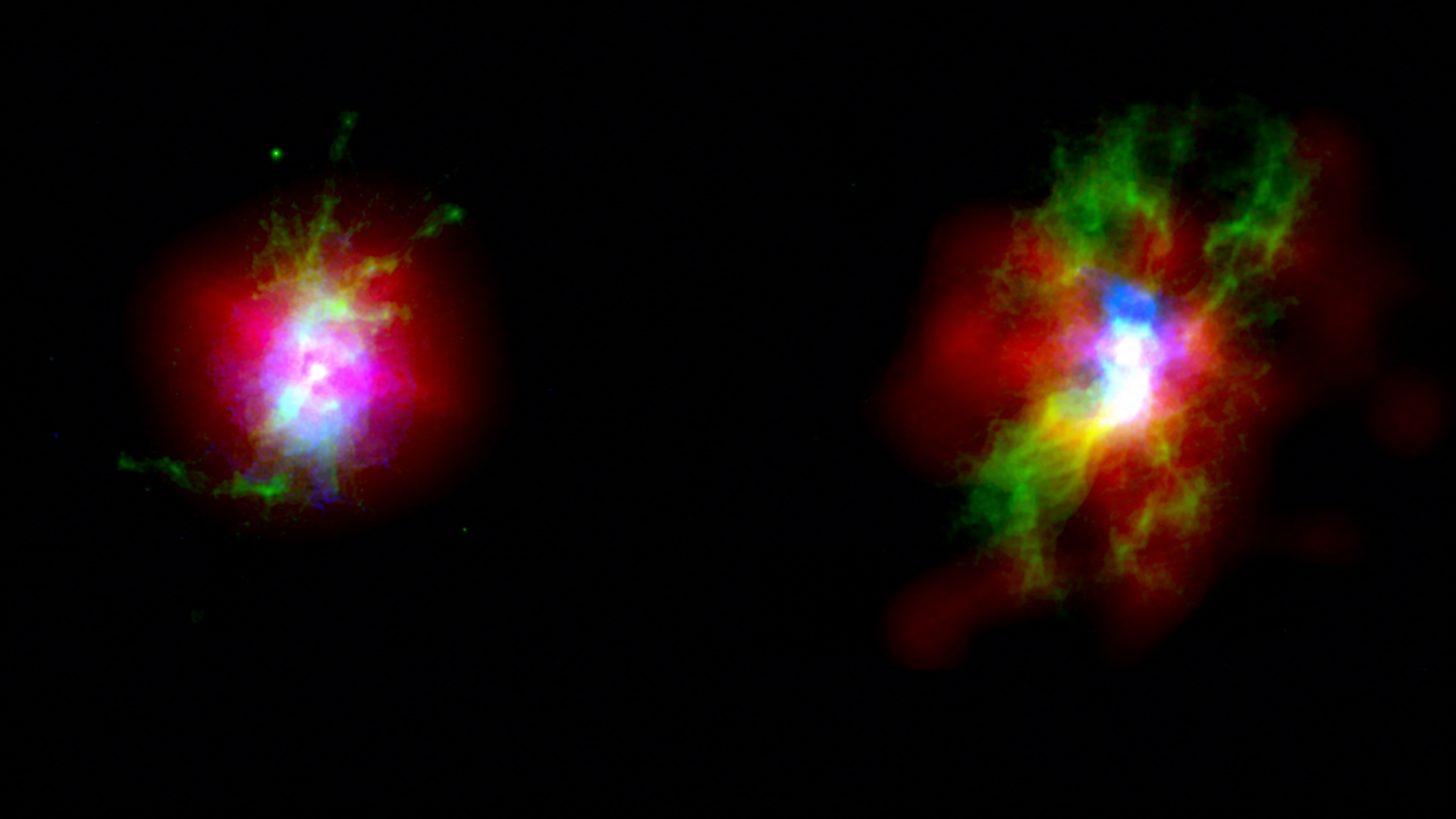
AAS 248 · Featured science
Tracing Winds from Supermassive Black Holes into Galactic Gas
Chandra and Hubble reveal contrasting relationships between photoionized X-ray-emitting gas and warm ionized gas in two luminous type 2 quasars.
Explore the result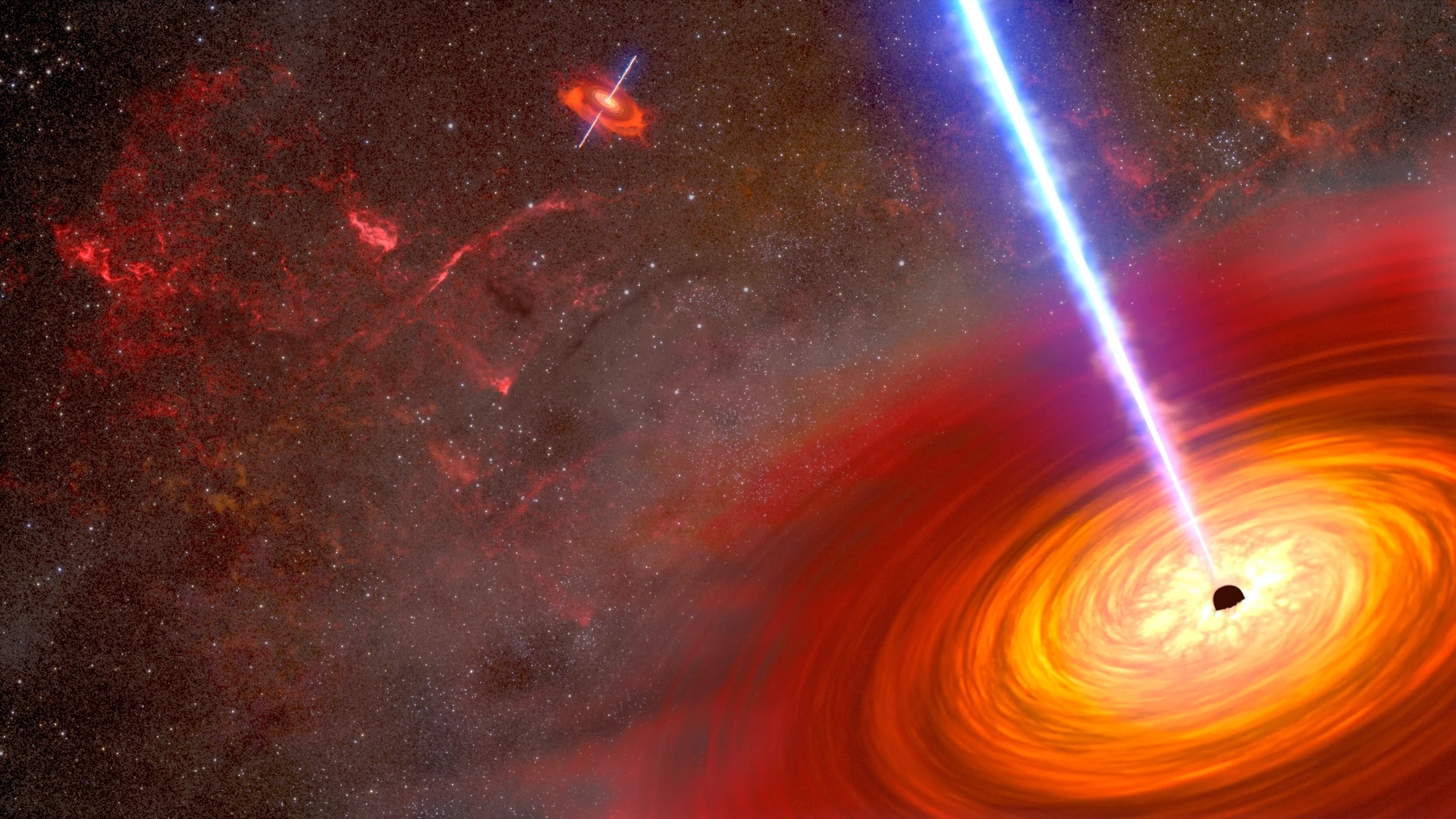
NASA · Hubble, Chandra, and VLA
A Candidate Supermassive Black Hole Duo
Chandra, Hubble, and VLA observations resolve compact structures consistent with a candidate pair of accreting supermassive black holes separated by approximately 100 pc.
Explore the result