
Observational approach
How I investigate this question
I compare resolved X-ray morphology and spectroscopy with optical and infrared emission-line structure from the nuclear region to galaxy scales.
Observatories
ChandraHubbleVLT
Research area
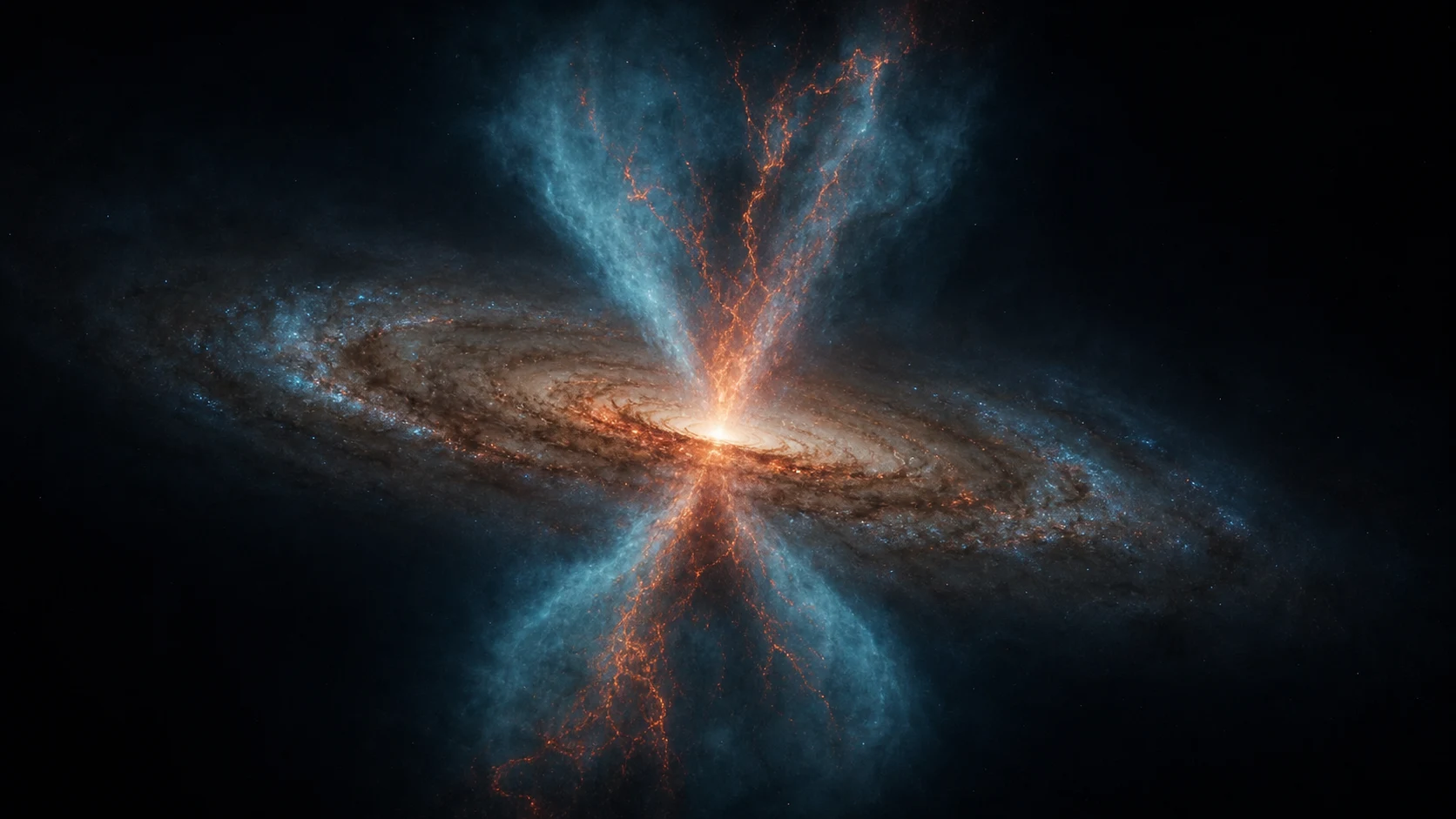
Investigating where AGN outflows interact with highly ionized X-ray-emitting and warm ionized gas in nearby active galaxies.
Observational approach
I compare resolved X-ray morphology and spectroscopy with optical and infrared emission-line structure from the nuclear region to galaxy scales.
Observatories
Physical interpretation
Spatial correspondence identifies candidate interaction sites; demonstrating feedback requires independent constraints on gas dynamics, ionization, and the transfer of energy or momentum.
Scientific questions
Where do observations indicate that an AGN-driven wind may first interact with the surrounding interstellar medium?
How do the observable signatures of feedback change from nuclear to kiloparsec scales?
Which gas phases provide the strongest constraints on the energy and momentum transferred to the host?
Selected work